
Diamond Buying Guide
Why Diamonds
Diamonds are often considered a store of value because they combine rarity, durability, and recognizability. Unlike many other assets, they have a physical structure that remains stable over time and an international market that supports the perception of value. But that is exactly why oversimplification should be avoided: it is not enough to say that a diamond has value; you need to understand which diamond, with which characteristics, and in what context.
The value of a diamond is not abstract. It depends on concrete factors such as carat, color, clarity, cut, and certification. Two stones that look similar at first glance can have significant differences in price and quality. For this reason, a diamond should not be treated like any ordinary decorative object, but as an asset that must be evaluated through precise criteria.
Another important aspect is liquidity perception. Many people associate diamonds with wealth protection, but that does not mean every purchase is automatically solid or easy to resell. Value retention depends on the quality of the initial selection, the transparency of the offer, and the ability to document clearly what was purchased.
In other words, diamonds can make sense as a store of value when the selection is made with method. The goal is not to chase a generic idea of stability, but to identify stones with characteristics that are understandable, verifiable, and consistent with the purpose of the purchase. That is where the real criterion comes into play: not the appeal of the asset, but its measurable quality.
“For this reason, the first question is not how much a diamond costs, but how it should be properly evaluated.”
How to Choose
Shape
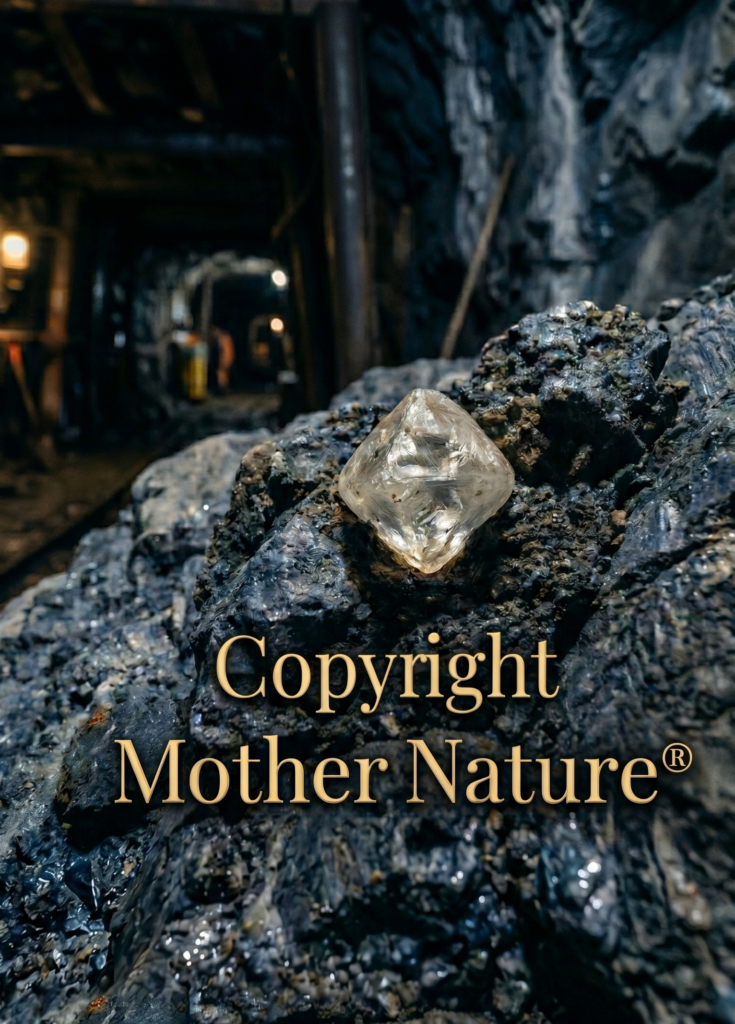
Shape also deserves a mention, because the diamond’s shape affects its visual appearance, light distribution, and the kind of demand it may attract in the market. Some shapes are more common, while others are more unusual and therefore commercially rarer. Fluorescence, on the other hand, is a complementary factor: it can alter the stone’s appearance under certain lighting conditions, so it should be read together with the other parameters rather than in isolation.

Choosing a natural diamond depends on a set of criteria that must be read differently depending on whether the stone is a white diamond or a colored diamond. In both cases, the evaluation begins with objective factors, but the parameter that drives the overall reading of the stone changes.
In short, the right choice is never based on a single parameter, but on the overall reading of weight, color, clarity, cut, shape, and color origin. The difference between white diamonds and colored diamonds is not that some criteria apply only to one category, but rather how those criteria are interpreted and weighted in the final evaluation.

Professional report for a colored diamond
Also includes color distribution, meaning how evenly the color is spread across the stone, and color origin, which indicates whether the color is natural or the result of laboratory treatment. These elements help define not only the stone’s quality, but also its true rarity and market position.

White diamonds
the main reference is the 4Cs system:
carat, color, clarity, cut.
Carat indicates the diamond’s weight, while the other three factors help define the stone’s overall quality. Cut affects brilliance, color measures the degree of visible tint, and clarity evaluates the presence of internal inclusions.

Colored diamonds
The principle is different, because value here depends primarily on the quality of the color itself. GIA considers three fundamental components: hue, tone, and saturation. Hue is the diamond’s primary color, such as pink, blue, or yellow, and may include secondary modifiers; tone indicates how light or dark the color appears; saturation measures the strength and intensity of the color.
For colored diamonds, GIA uses a specific scale that includes levels such as Fancy Light, Fancy, Fancy Intense, Fancy Vivid, Fancy Deep, and Fancy Dark. In general, the more intense and pure the color, the rarer and more sought-after the diamond tends to be. For yellow and brown diamonds, the fancy classification begins only beyond the D-to-Z scale, while lighter tones remain in the colorless range or in the cape diamond category.
Transparency
A serious diamond purchase should always begin with clarity about what is being bought. The value of a diamond is not only in its appearance, but also in how well its characteristics are documented and understood. That is why transparency matters: it allows the buyer to evaluate the stone on objective grounds, not on impressions alone.
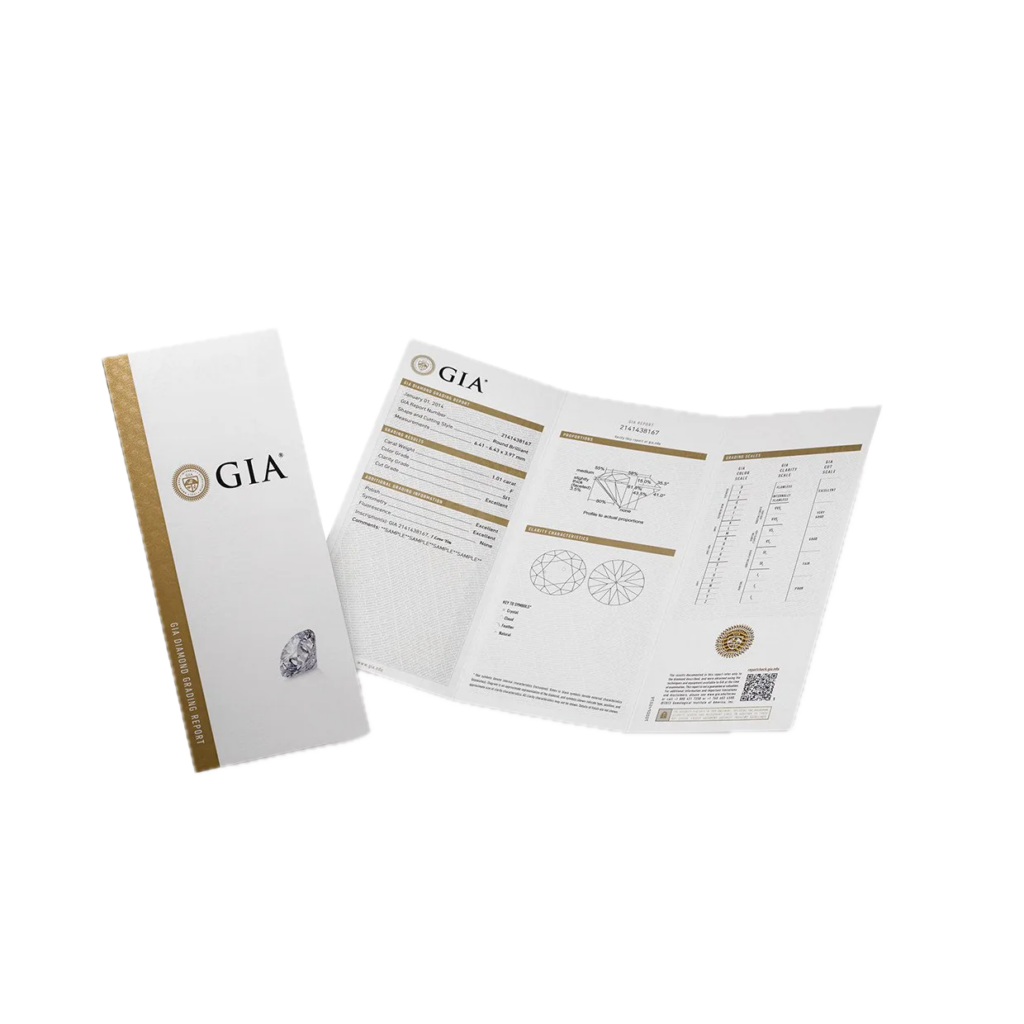
A professional diamond report should make it possible to identify the stone clearly and verify its main characteristics. For white diamonds, that usually means carat weight, color, clarity, cut, polish, symmetry, fluorescence, measurements, and any relevant comments. For colored diamonds, the report may also include information about color distribution and color origin, which help explain how the stone should be read in a market context.
This is especially important because two diamonds that look similar can differ significantly in quality and value. A report does not replace expertise, but it gives the buyer a reliable framework for understanding the stone’s identity, whether the diamond is being evaluated for beauty, rarity, or long-term value retention.
In practice, transparency means knowing not just the grade, but the whole story behind the diamond. Shape and cutting style help define how the stone is made; polish and symmetry describe the finish; fluorescence explains how the diamond reacts under ultraviolet light; and, for colored stones, origin and distribution add another layer of interpretation.
For this reason, a trustworthy proposal should always be accompanied by clear documentation, so the buyer can compare stones on consistent terms. The goal is not to make the process more complicated, but to make it easier to understand what truly justifies the price.
Protection and Resale
A diamond’s long-term value depends not only on what it is, but also on how well it was selected and documented at the start. A stone with clear grading, reliable documentation, and consistent characteristics is generally easier to evaluate later, whether for resale, trade-in, or long-term asset planning.
That is why transparency matters beyond the moment of purchase. A professional GIA report helps reduce uncertainty because it gives buyers and future appraisers a clear set of reference points: carat, color, clarity, cut, polish, symmetry, fluorescence, and, for colored diamonds, origin and color-related information.
For natural colored diamonds, GIA reporting can be especially important because it helps distinguish between natural color and treated color, and may also include origin information where applicable. Those details matter because they shape how a diamond is understood in the market and how its rarity is interpreted over time.
In practical terms, a diamond that is easy to identify, verify, and explain tends to travel better through the market. That does not guarantee a price outcome, but it does improve clarity for anyone who needs to assess it later, especially when comparing stones of similar size or appearance.

For this reason, protection is not only about storage or care, but also about keeping the documentation complete and coherent. A diamond with a strong paper trail is easier to place, easier to compare, and easier to support as part of a broader value-preservation strategy.